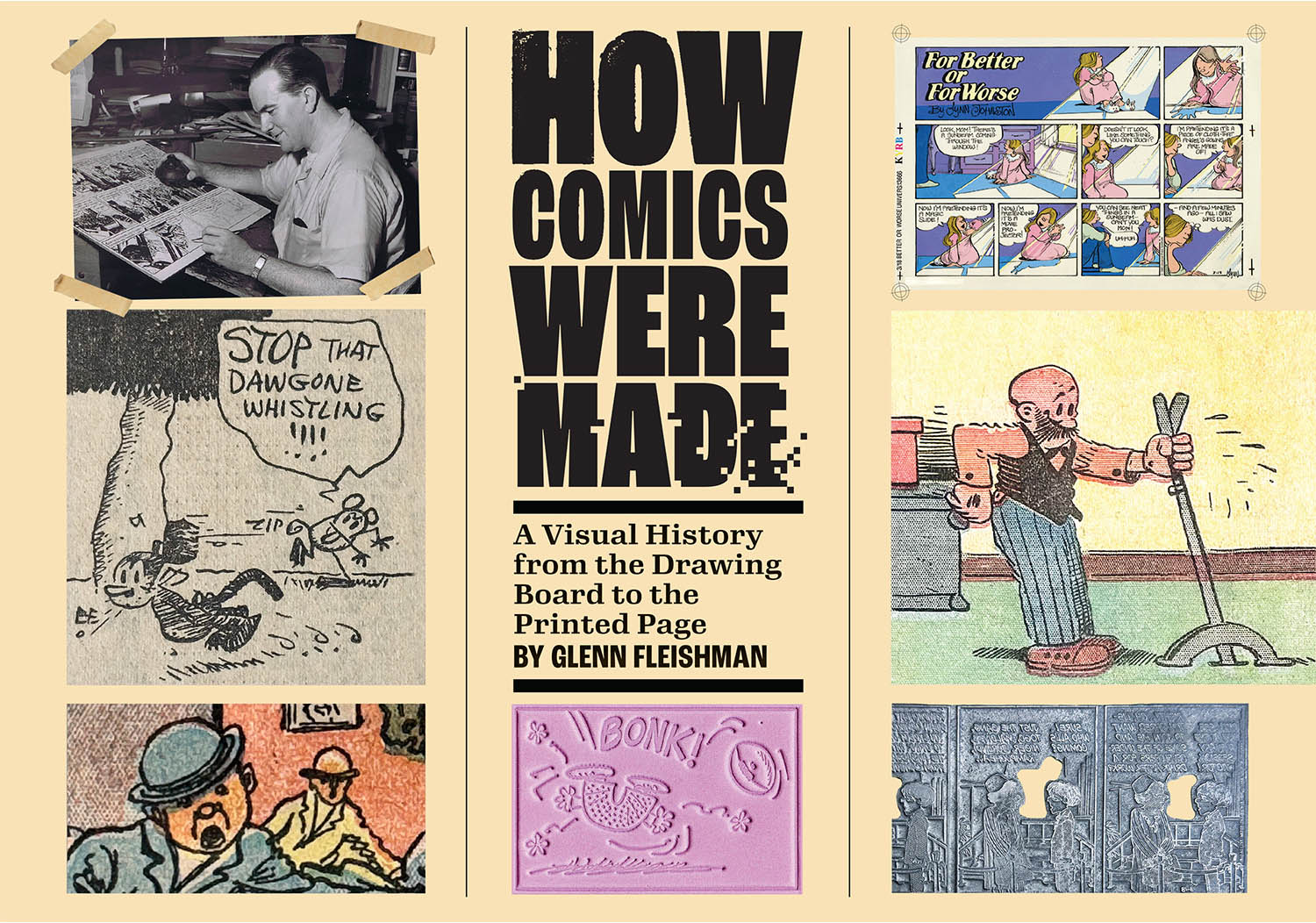
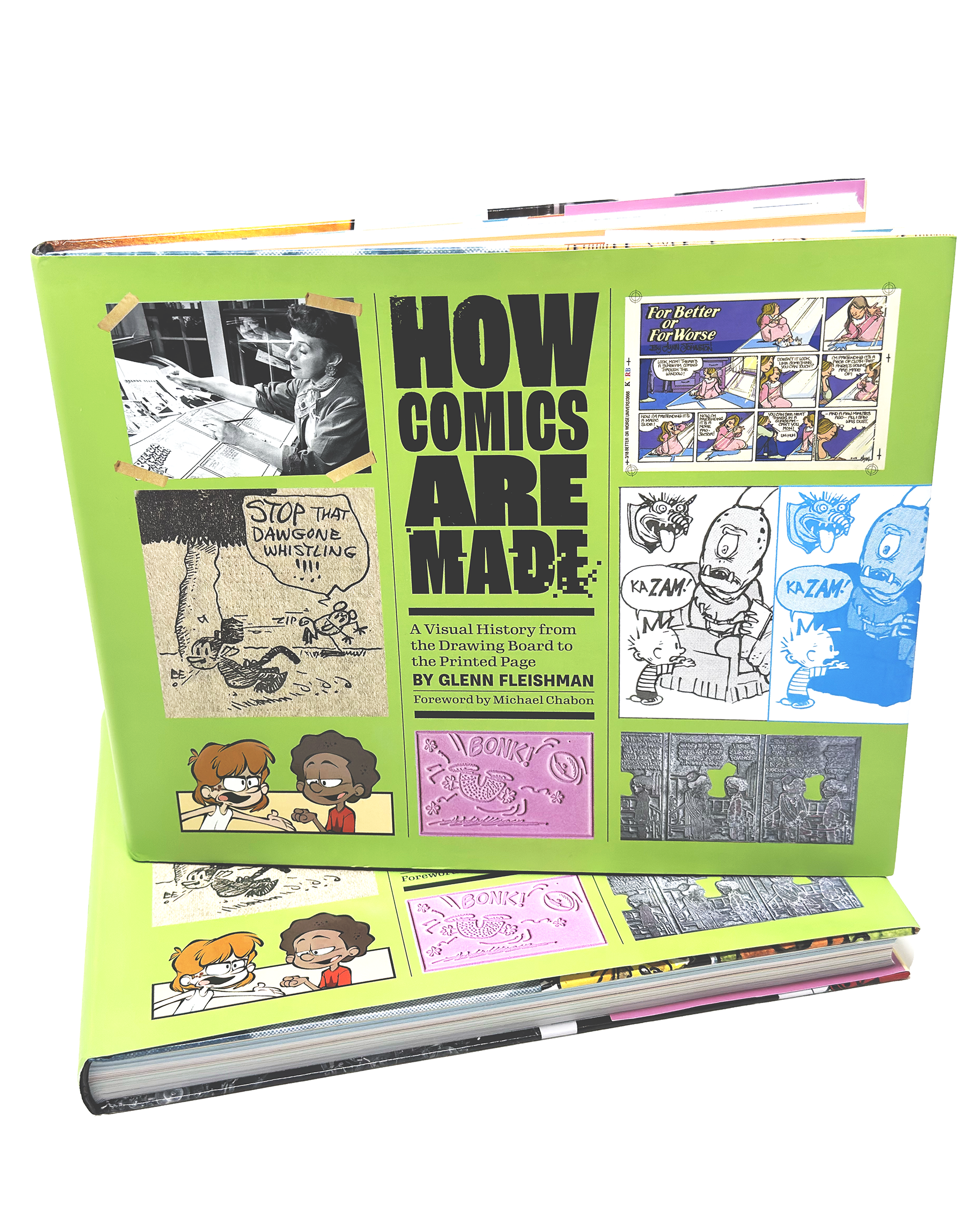

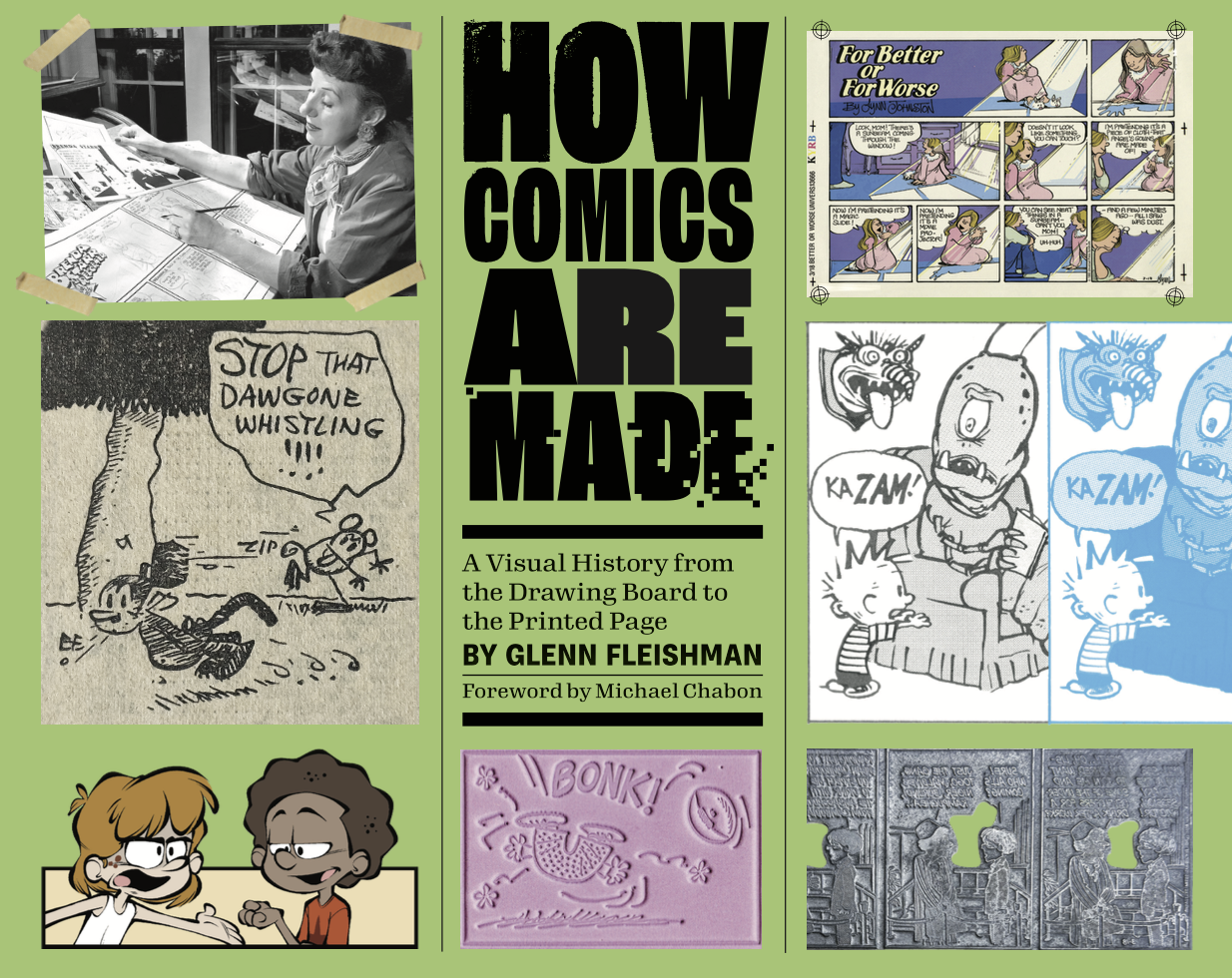
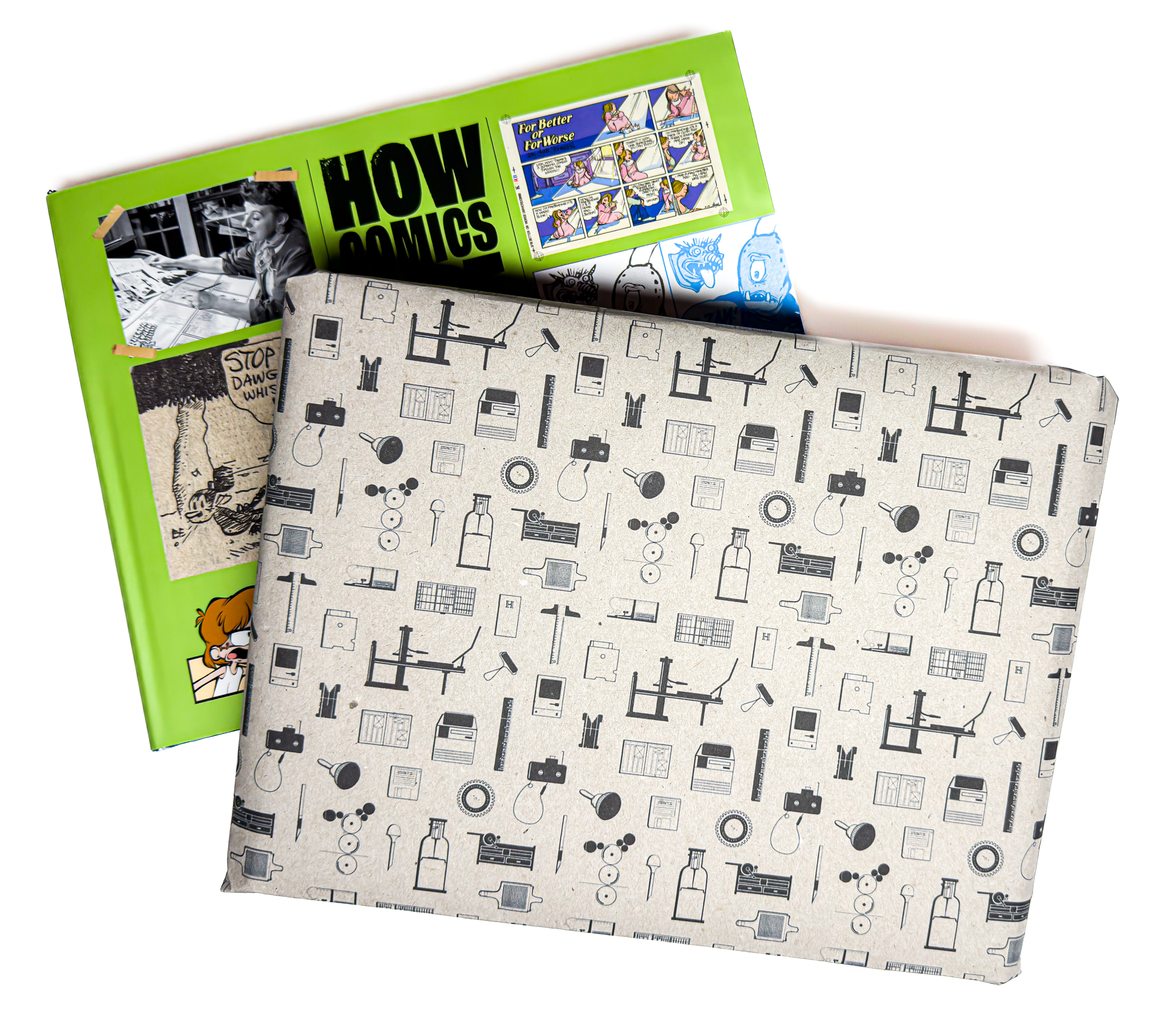
How Comics Are Made
A Visual History from the Drawing Board to the Printed Page
A visually rich celebration of the newspaper comic as an art form and object of industrial production, from the 1890s to the 2020s. Signed and inscribed.
Details
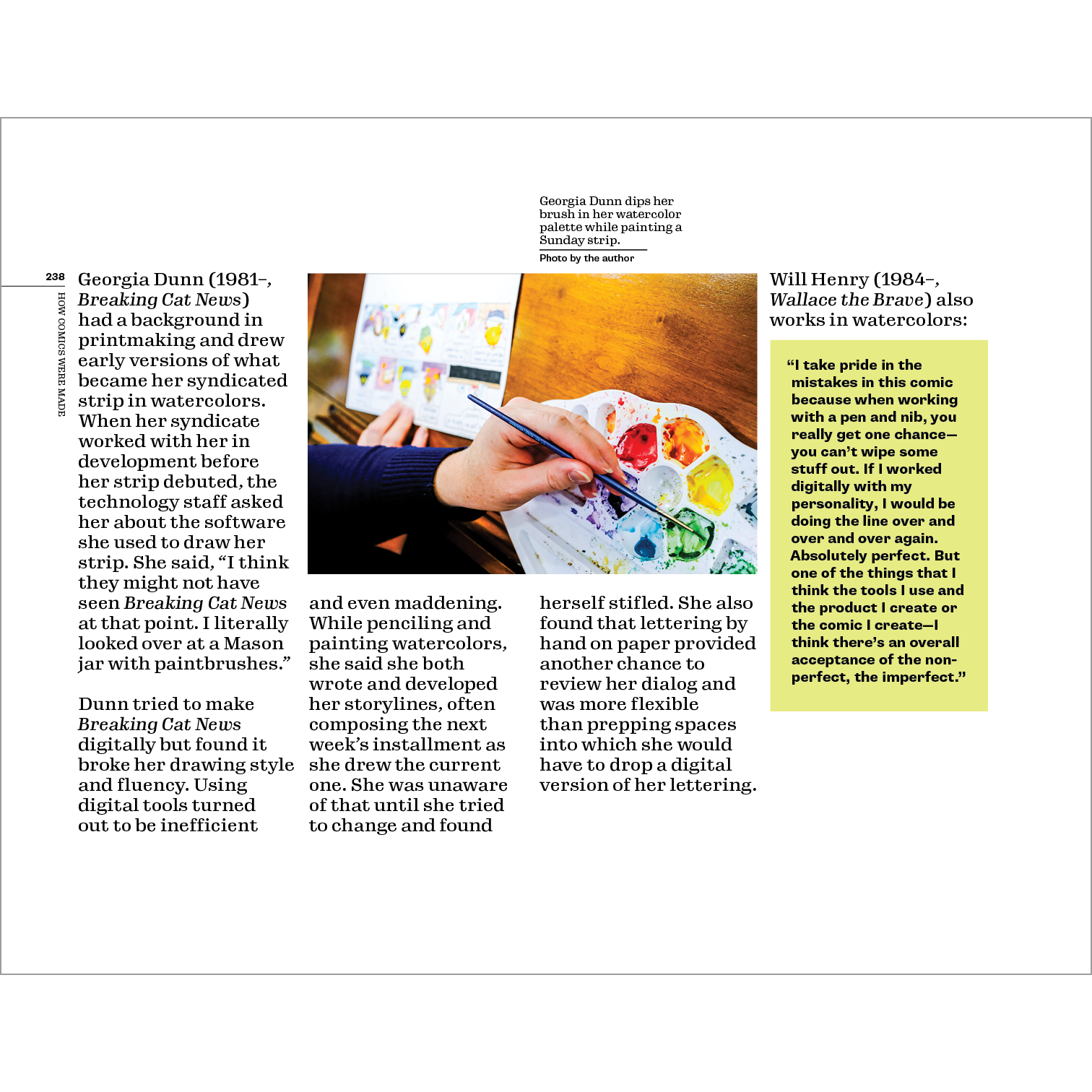
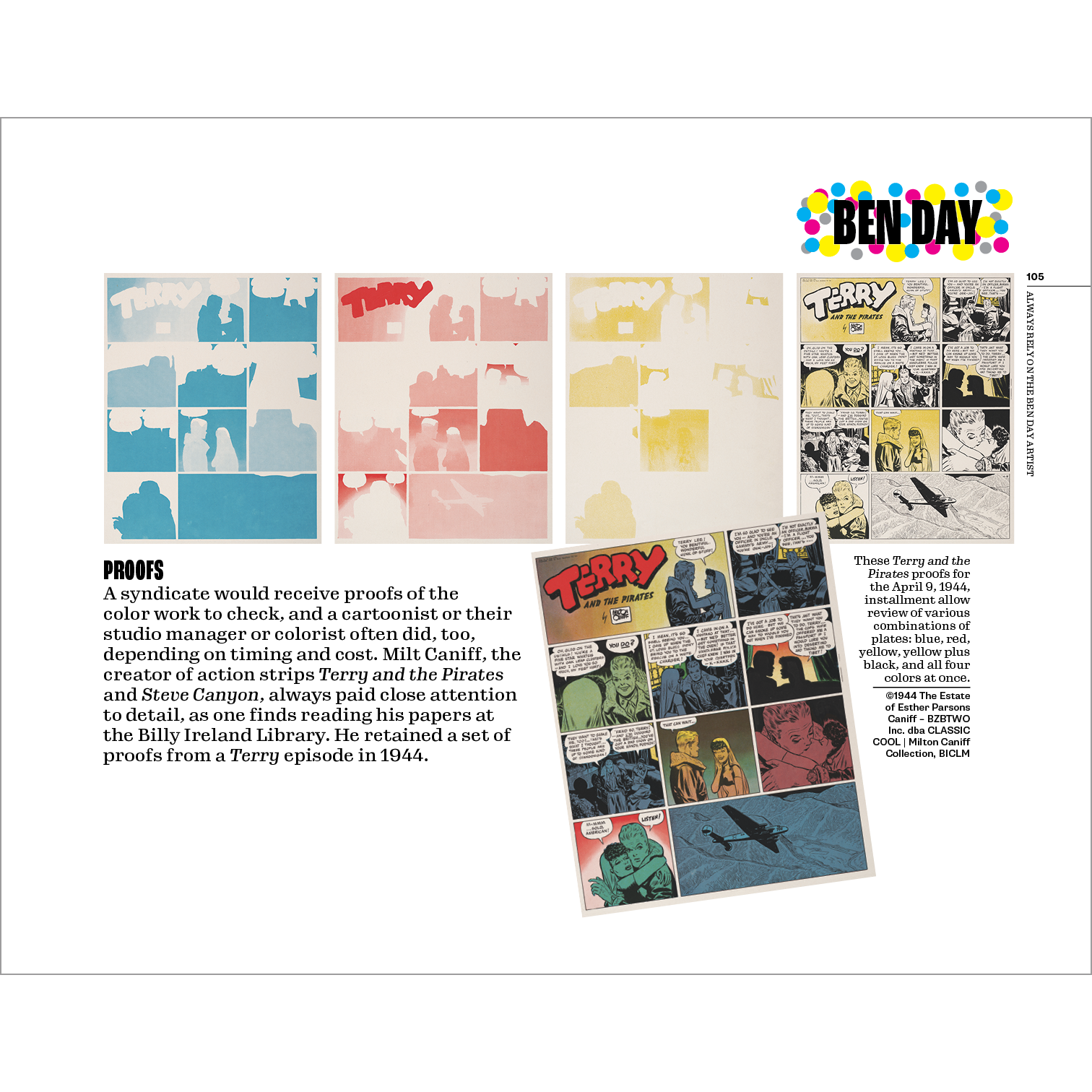
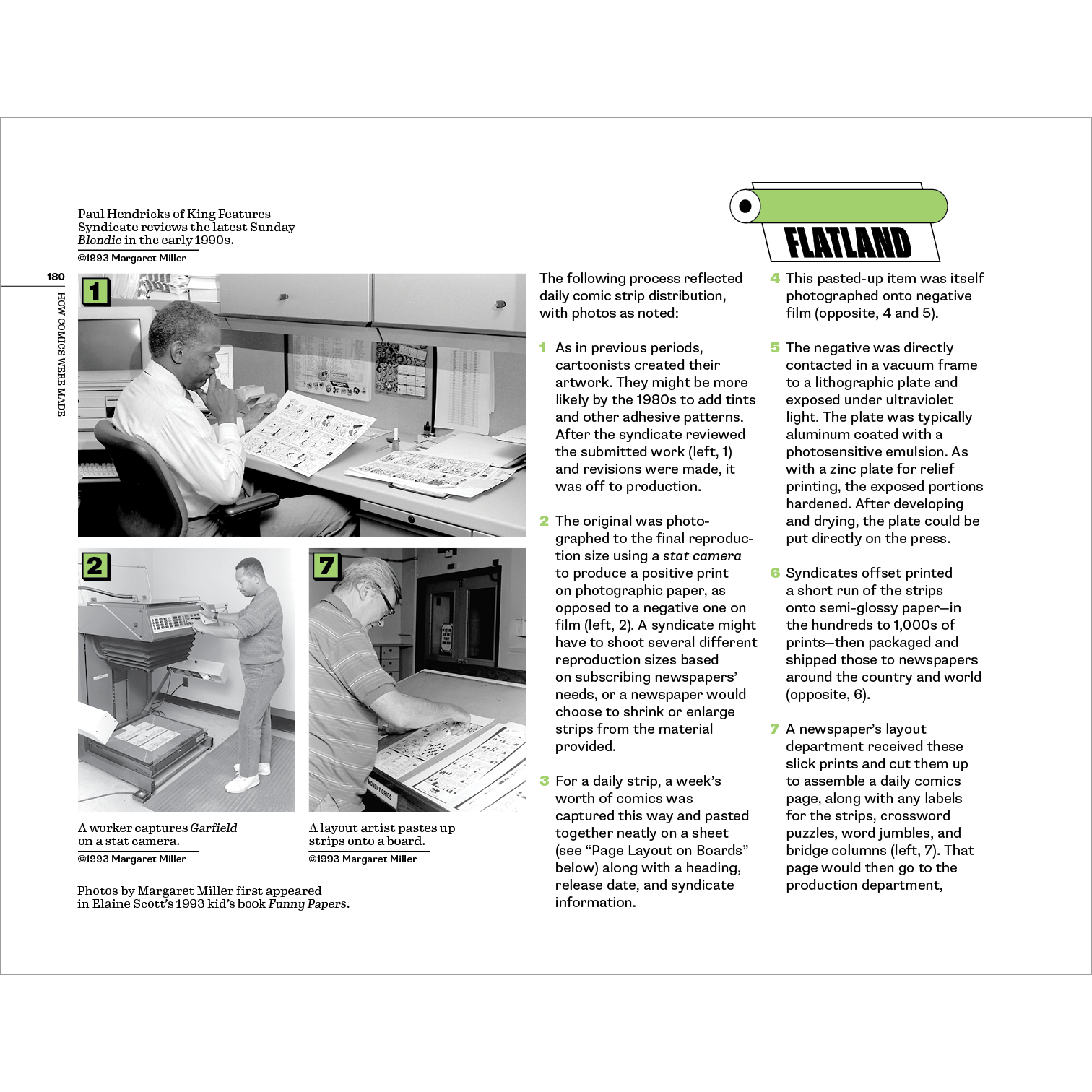
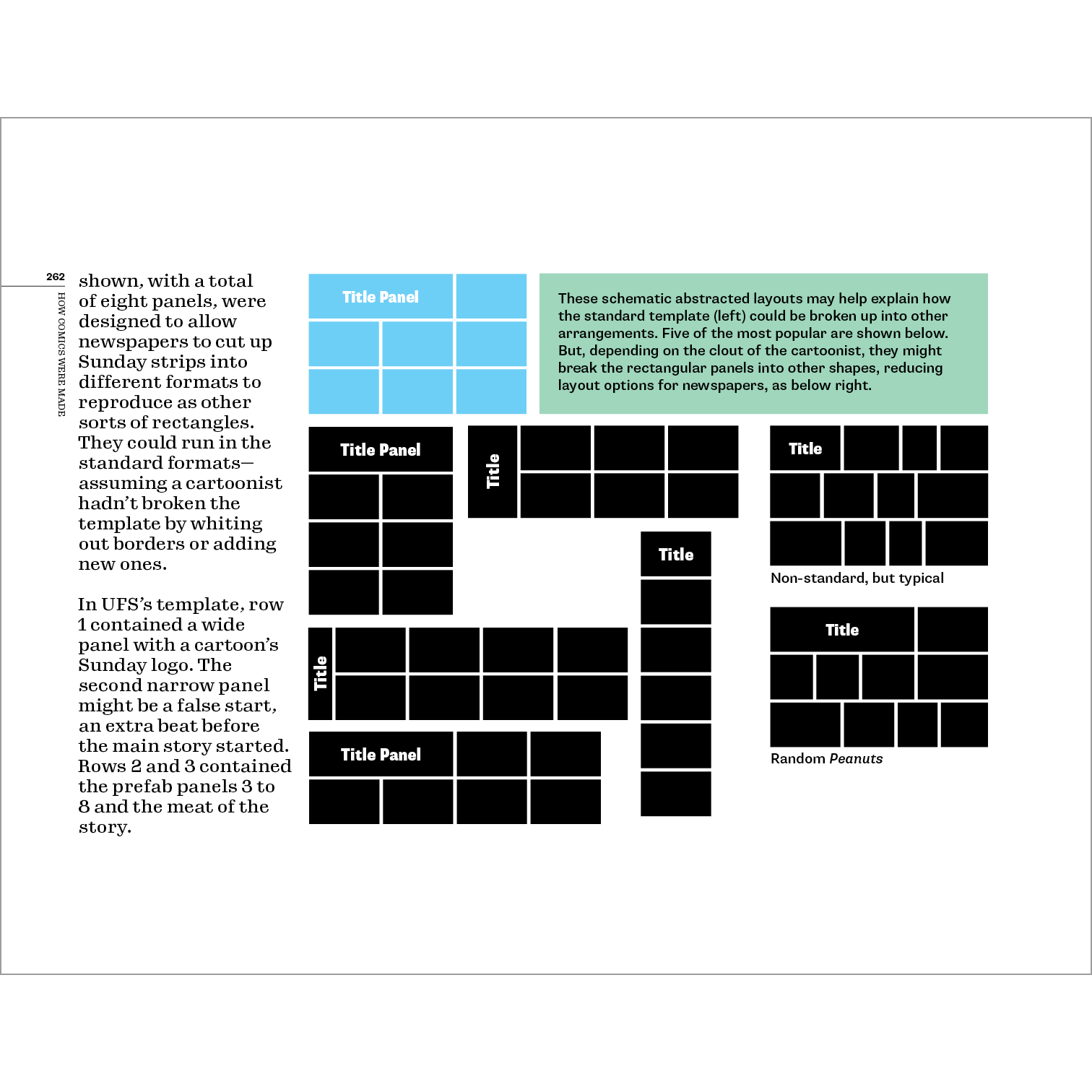
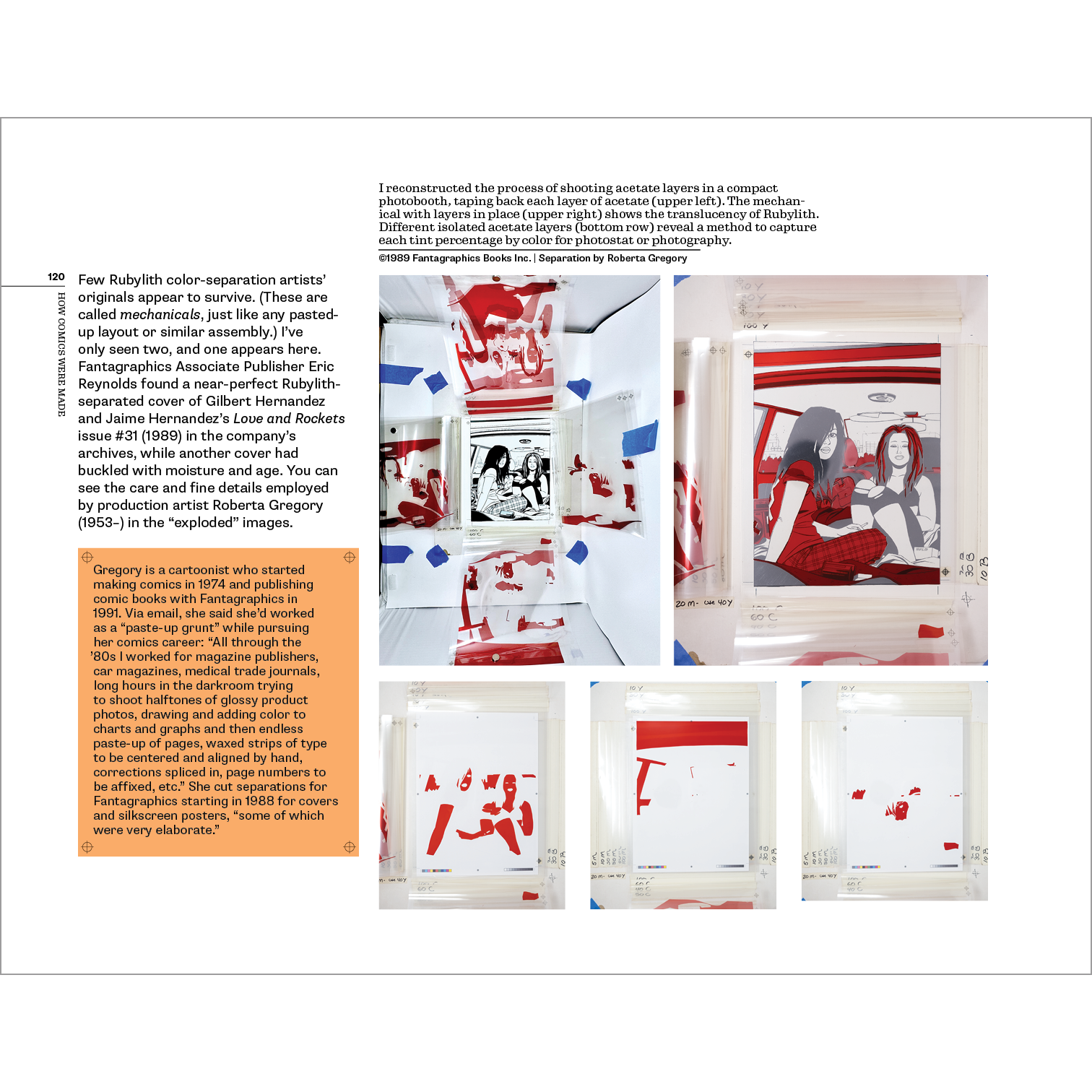
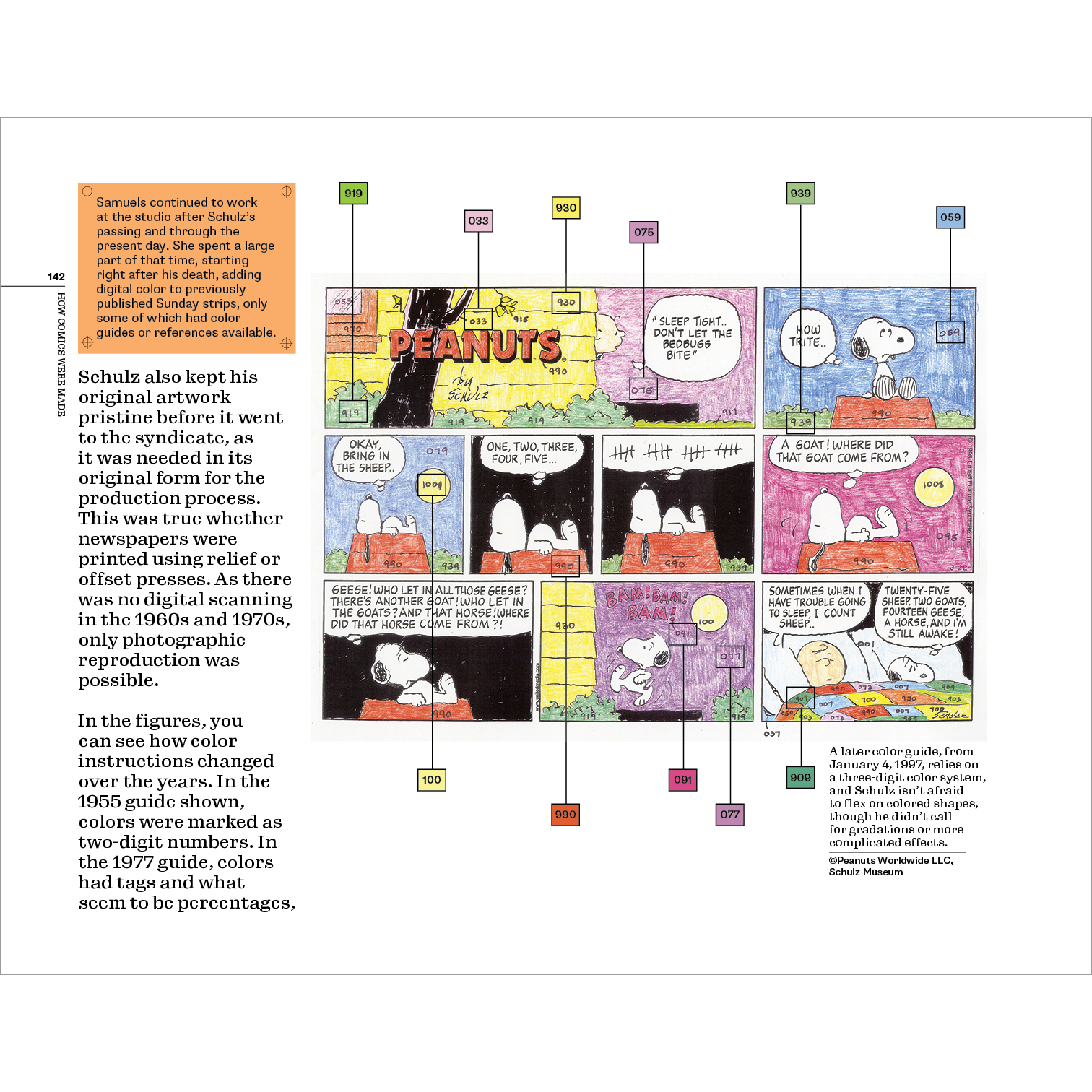
How Comics Are Made celebrates the evolution of the comic strip: from the Yellow Kid and early syndication through the very latest webcomics. This covers the whole ball of wax of how artists, knowing their newsprint medium, drew their comics and marked drawings up for color reproduction; how printers put that work through the most arcane and impossible-to-believe operations to get them onto paper; and how modern cartoonists produce cartoons for print and online or web-only.
The 288-page book is laden with original cartoon artwork, photographs, scanned newspaper reproductions, and illustrations, some of which have never appeared in print anywhere, while some historic comics appear for the first time ever in any medium in this book.
How Comics Are Made relies on my personal collection of printing artifacts backstopped with the help of artists, estates, and institutions that thankfully retained original work and newspaper and printed versions. Key among them is the Billy Ireland Cartoon Library & Museum at the Ohio State University in Columbus, Ohio. The Charles M. Schulz Museum and Research Center also provided extensive assistance and material.
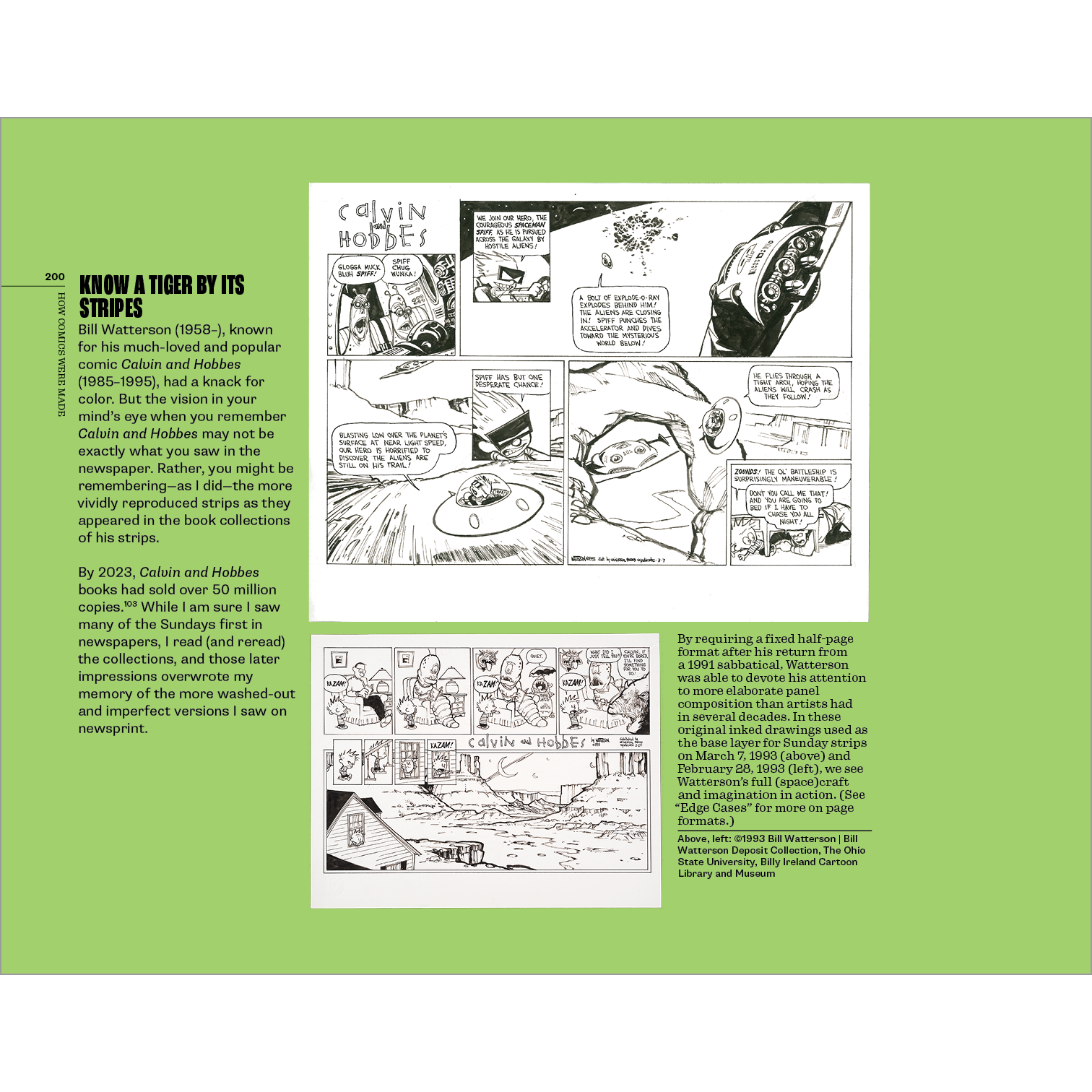
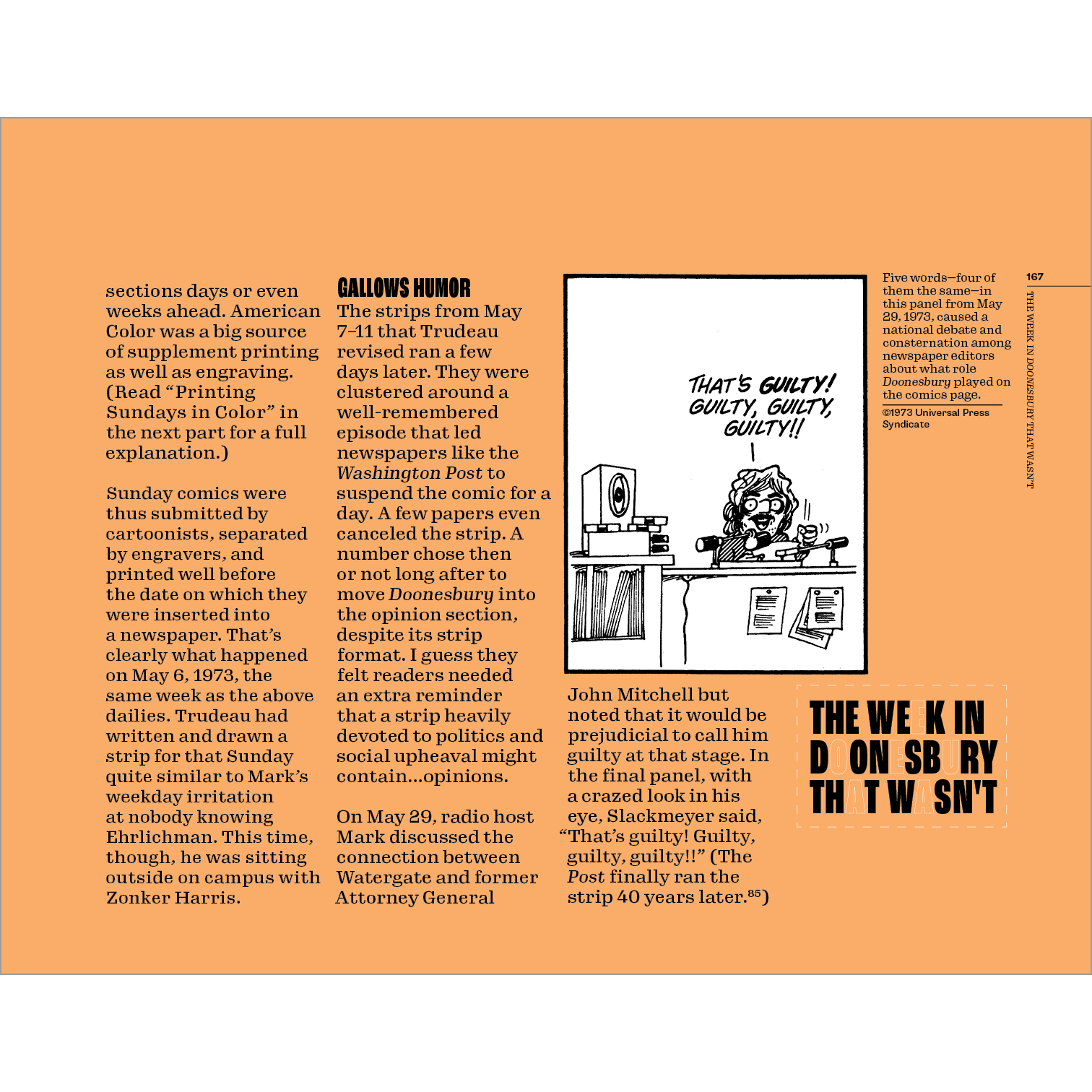
As part of the book, I interviewed dozens of cartoonists about the aesthetic and functional choices they made and make to ensure their work remains true to their vision through print and online production, particularly around color. Among 40 interviewees are Tom Batiuk (Funky Winkerbean, Crankshaft), Bill Griffith (Zippy), Garry Trudeau (Doonesbury), comics historian Brian Walker (author of The Comics: The Complete Collection), and Bill Watterson (Calvin and Hobbes).
What you'll find in the book:
- How artists incorporated feedback from newspaper printing into their aesthetic and drawing choices
- Bill Watterson's choices when it came to coloring Sunday strips
- Laying down tones and patterns: artists' stipples and dots, Ben Day screens, Zipatone, and digital coloring
- The transition from relief (raised metal or letterpress) printing to offset (flat or planographic)
- The shift from a limited set of colors for Sunday strips to "full" color
- How artists show Black faces in a medium favoring empty circles: cross-hatching, tints, tradition, and more, with a guest appearance from Langston Hughes
- The elaborate process of syndication before photostats, photocopiers, and scanners
- Drawing and production methods of artists making webcomics
- Rare original and printing artifacts showing cartoons that never appeared in print
<!-- squarespace-history -->
More from the Squarespace listing
If you love newspaper comic strips, you will love my book How Comics Are Made: A Visual History from the Drawing Board to the Printed Page.
For a limited time, I’m offering signed and optionally inscribed copies, where you can have me write a message to you or someone else. (For regular copies, consult your local or online bookstore.) You can also get your copy giftwrapped at no extra cost!
I’ve combined years of research and the diligent collection of unique comics printing artifacts with dozens of interviews with cartoonists, historians, and production people to tell the story of how a comic starts with an artist’s hand and makes its way through transformations into print and, more recently, onto a digital screen.
It features excerpts from interviews with Garry Trudeau, Lynn Johnston, Bill Watterson, Barbara Brandon-Croft, and many others, as well as never-before-seen installments and materials from Doonesbury, Peanuts, For Better or For Worse, and dozens and dozens of other cartoons. The book features a three-page foreword by Pulitzer Prize–winning author Michael Chabon.
About the Book
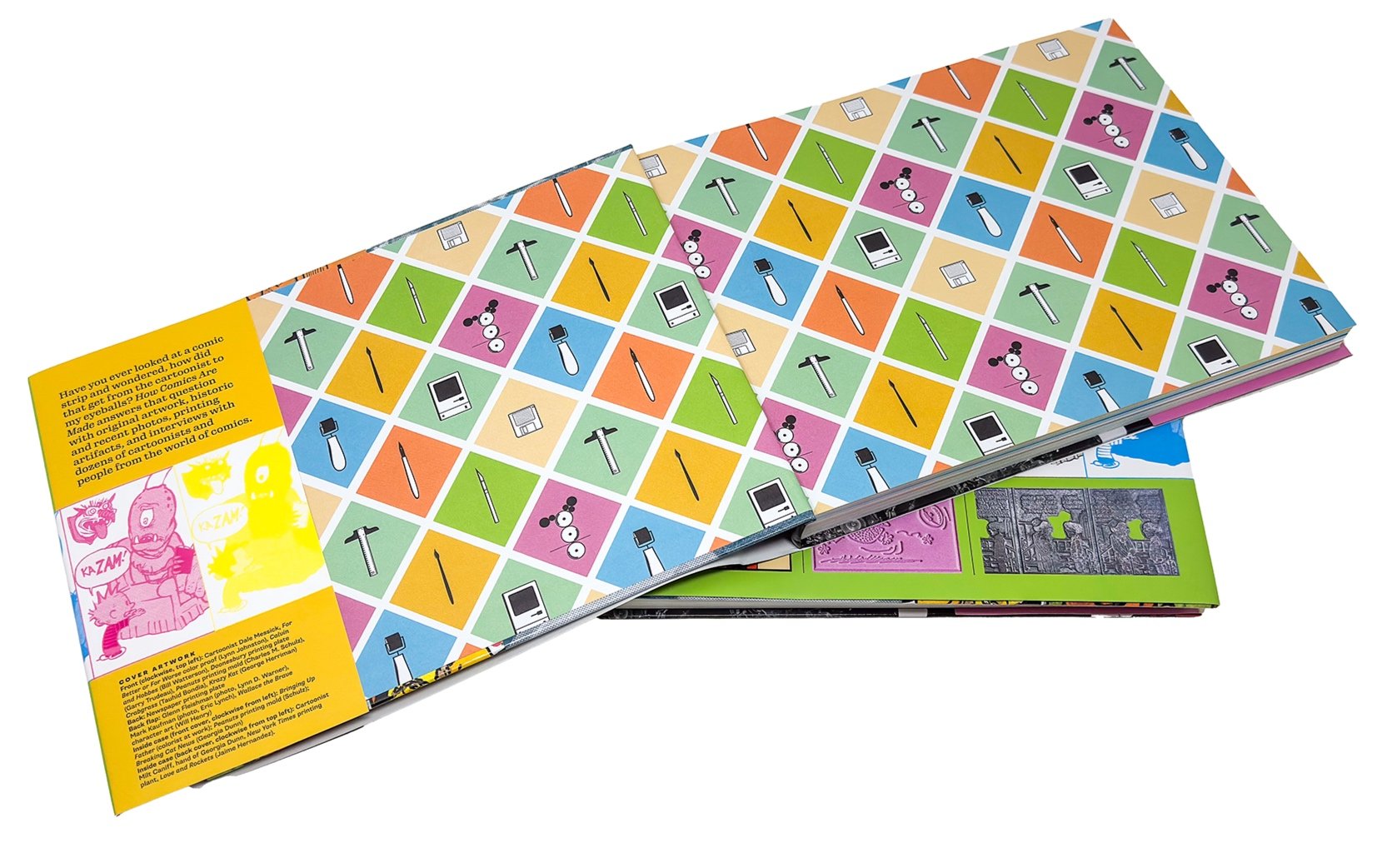
How Comics Are Made is a 288-page full-cover hardcover book with a printed case cover and full-color dust jacket. It measures 8½×11 inches (22×28 cm), and includes a 14-page index.
Specifications
- Author / Creator
- Glenn Fleishman
- Publisher
- Aperiodical Publishing Co.
- Publication Date
- June 2025
- ISBN
- 9781524898779
- Pages
- 288
- Dimensions
- 8.5×10.5 inches (22×28 cm)
- Format
- Full-cover hardcover with printed case and full-color dust jacket
- Weight
- 3 lbs
Gallery